Thursday, August 30, 2007

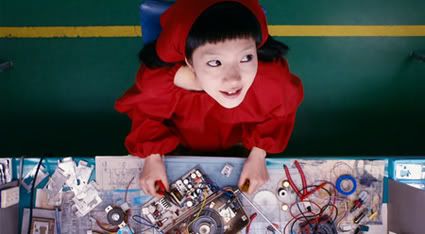
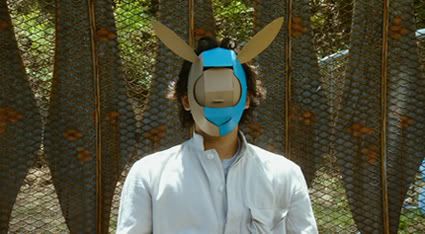
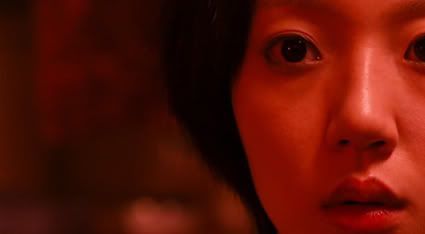
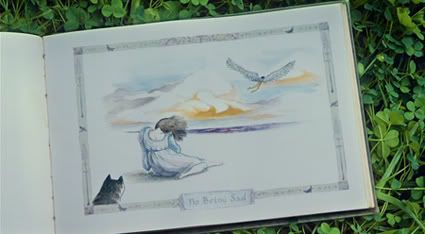
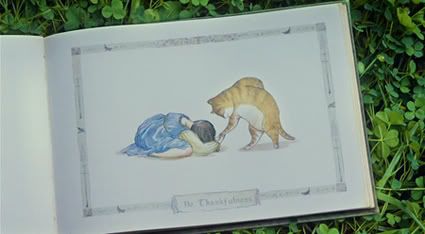
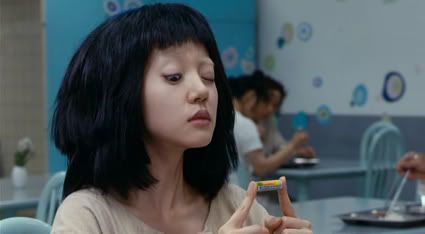
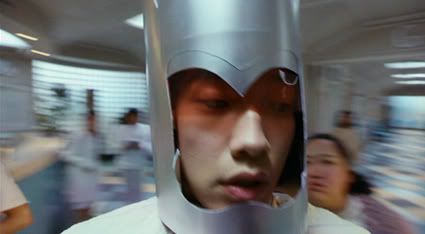
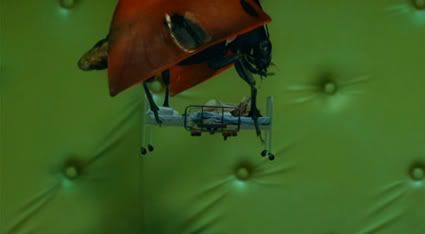
i'm a cyborg, but that's ok

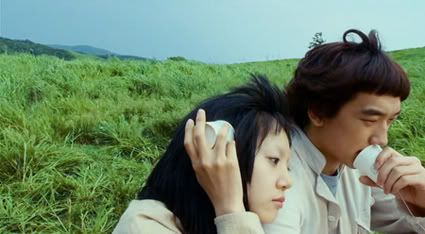
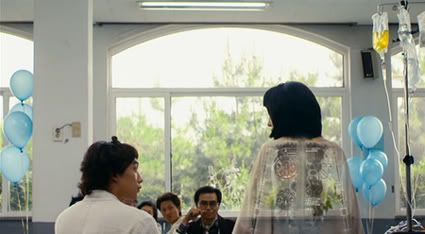
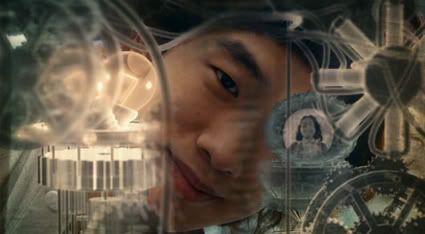
I'm a Cyborg, But That's Ok (Park Chan-Wook, 2006) - 8/10


"Sympathy is the worst of the 7 deadly sins.
For your reference, the following 6 are as follows.


Being sad.


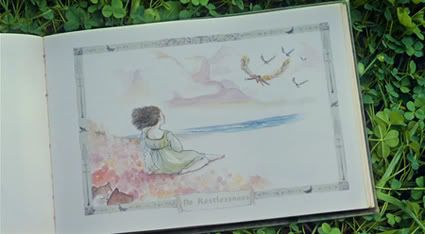
Restlessness.


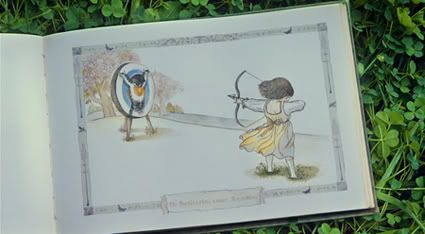
Hesitating about anything.


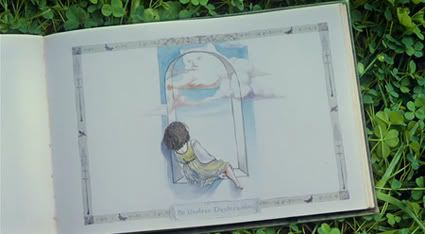
Useless daydreaming.


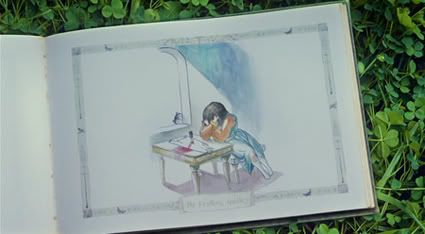
Feeling guilty.


Thankfulness.

The above was in the order of evilness.

Useless daydreaming about whether the white 'uns have grannies, too...
Sympathy about their grannies if the white 'uns died...
And hesitating about killing them, you must forego these sins."


Friday, July 6, 2007

café lumière


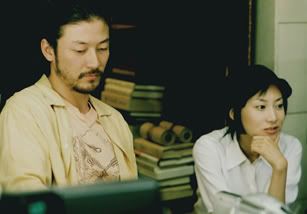
Café Lumière (Hou Hsiao-hsien, 2003) - 8.5/10

After watching Café Lumière, my third film from Taiwanese director Hou Hsiao-hsien (Three Times, and Millennium Mambo), I realize the patience his films require.

When watching Millennium Mambo I was put off by the long takes of the characters doing the most ordinary and mundane actions. Such as a one minute take (might be a little off) of Shu Qi's character lighting and smoking a cigarette. Or a character walking in and out of the kitchen pouring a drink.

Café Lumière is the slowest of the three films I've seen from Hsiao-hsien. I have no problems with this. In fact, Café Lumière is the one I love most. The movie is constructed in a way where you feel like an observer. From the train ride scenes, where it seems the viewer is settled inside the train accompanying/observing the character of Yôko (played by Jpop artist, Yo Hitoto, in her first film acting role). Yôko is a freelance writer content on being independent. She has a place of her own, and feels no desire to marry the guy whom she is pregnant with, wanting to bring up the child on her own. It may seem from an outer layer that her relationship with her parents is close, but far from it. As far as them struggling to communicate with one another.

Tadanobu Asano (Ichi The Killer) is Hajime, a book store owner and a very close friend to Yôko. Hajime comes off as carefree and laid-back, and acts as a support to Yôko's problems. But maybe deep inside Hajime is isolation. Something curled up, like the digital artwork he created of a fetus enclosed between multiple trains. When Yôko tells Hajime about her pregnancy, there is only a quiet response from Hajime.

The everyday existence of these characters are portrayed with ordinary actions from the characters, little dialogue, and a serene and quiet paced film that maybe mimics the existence of our ordinary beings.

Wednesday, June 6, 2007

millennium mambo


Millennium Mambo (Hou Hsiao-hsien, 2001) - 6/10

As she jogs through a blue lit tunnel with a captivating soundtrack playing in the background, the presence of Shu Qi, may compel you from the start. However, it's scenes like this which helps make Millennium Mambo watchable. What this film lacks is any real closure between scenes. Instead, director Hsiao-hsien, crafts his scenes to make them overly long. Characters performing the most mundane actions and daily routines taking up a lot of run time. Three Times, his only other movie I've seen contain elements of this, yet that movie manages to evoke wonder from those scenes. Millennium Mambo, almost feels rugged and raw (yet wonderfully shot), not surprising, considering the content the movie brings. The radiant and bright lights, seen illuminating the screen from Taiwan's underground night life, strikes a balance of tone in colour.

Shu Qi plays Vicky, a women who's life has been torn and somewhat wasted caused by a relationship gone wrong. An abusive, manipulative, and jealous boyfriend, Hao-hao, who deliberately ruined Vicky's education prospects. Fearing she would move on without him, both live together unemployed, and are frequent visitors of a nightclub, and inhabit the world of drugs. The depressing nature of their relationship heightened in a couple scenes, may make it hard to witness for some. Like the way Hao-hao scrutinizes Vicky in an attempt to uncover if she's cheated, by sniffing all over her, with her feeble attempt at annoyance. The anger that may evoke from viewers towards Hao-hao is another strong point the movie delivers.

Narrated by Shu Qi's character herself, in a third person point of view -- 10 years after the fact -- we at least sense some closure and contentment into her distraught life.

Tuesday, June 5, 2007

the road home


The Road Home (Zhang Yimou, 1999) - 8/10

Why not take that one last path to the road home? Another beautifully told dramatic tale from Zhang Yimou. Opening with black and white moving visuals, The Road Home glances back to the life of a young Di (played by Zhang Ziyi), into a luscious and colourful landscape enveloping a small village. Before elaborating into the past life of Di, we first learn of her husband's passing. Yusheng, Di's son, is realyed the news of the passing, where he leaves the city for the village where Di resdies. By Di's request, she envisions a long tradition of the funeral procession being carried along a road that connect the city to the village. For one last moment, she wants to walk side by side with her husband to the road home.

The story of Di is narrated by her son, Yusheng, as he tries to uncover why fulfilling his mother's request would mean everything to her. The simplicity of Yimou's film -- witnessed in his other poignant film, Riding Alone for Thousands of Miles -- uses beautiful imagery to help capture the emotions of the characters and mood. Zhang Ziyi, as the young Di, endures a graceful and innocent look, painted on her face, making it easy for us to care for her character.

Di and Changyu are 18 and 20 years old respectively. Yimou doesn’t forget they are 18 and 20 years old, young and ambitious. Like school kids in love. When Di fetches water from a well, she glances below to see Changyu reaching for the well. Her bucket already filled with water is dumped back into the well. And how does Yimou capture our interest when an elderly man puts together pieces of a broken bowl? The imagery to capture emotion, as we realize the emotional connectivity the bowl has for Di, and her devotion and care into making the perfect meal for Changyu.

The expansion into the character of Changyu could have gone further. After 40 years, what is it about Changyu that has made Di love him after all these years. Is it just the pleasure of hearing his voice? Or the young, blind love that has carried on for 40 years? Di’s devotion to Changyu, who has been strayed away from her in the beginning, makes her character ever more fragile. As the funeral procession to the road home commences, we may not feel emotion for Changyu, but I would think Yimou would like us to sympathize for Changyu through Di.

Saturday, May 26, 2007

memories of matsuko


Memories of Matsuko (Tetsuya Nakashima, 2006) - 10/10

Director, Tetsuya Nakashima brought you Kamikaze Girls previously. A movie boasting two female characters struggling to find common ground in their friendship. My first glance into Nakashima's work, his film-making style hit me from the start. Memories of Matsuko opens almost fairytale-like. The opening underwater sequence reminded my of the sequence in Walt Disney's The Little Mermaid. In fact, Nakashima manages to combine numerous fantasy/fairytale elements and elements from famous films. An example include The Wizard of Oz, where we experience a scene reminiscent to the yellow brick road. Aside from the beautifully stunning scenes of bright and luscious colours, Japanese pop music (Jpop) vibe, and bits of animation, therein lies a beautiful and tragic story of Matsuko.

Told through flashbacks (memories) into the life of Matsuko, Matsuko's nephew attempts to unearth why she was murdered, and any traces of memories others and him might have of Matsuko. We realize through these memories, that love and loneliness played opposing forces throughout Matsuko's life. Love she seeked, loneliness she avoided. But through avoiding loneliness, love avoided her. From the two films I've enjoyed in Nakashima's work, he creates female character roles with strong development and personalities, and with their own set of misguided opportunities in life. What is life if you don't live it to the fullest? Its no wonder the resemblance to the yellow brick road recognizes the road leading to one's path in life, no matter how difficult or tragic.

Wednesday, May 9, 2007

update for may......


Nobody Knows (Hirokazu Kore-eda, 2004) - 9.5/10

A realistic portrayal into the lives of four siblings who struggle to survive and live on their own. After their mother takes off, the oldest sibling Akira, is left responsible to maintain their survival. Based on true accounts (which appear more grisly than what the film portrays), Nobody Knows sustains the touch of realism. The film sucks you into the lives of these characters, with a feeling of empathy through their innocent persona and heartbreaking moments.

Time (Kim Ki-duk, 2006) - 8/10

My fourth Ki-duk film which looks into Korean's societies' fascination with plastic surgery. Time specifically focuses on two lovers, where Seh-hee questions her lover's (Ji-woo) appreciation of her physical attributes. Is Ji-woo tired of gazing at Seh-hee's same features day after day? Would plastic surgery cure Seh-hee's doubts? Time contains some confusing and fascinating moments. Confusing, when characters appear or don't appear to be who they are. Fascinating, in how the film gets you thinking at the few twists. In the style of Ki-duk, the characters and actions don't really add up to reality.

Windstruck (Kwak Jae-young, 2004) - 7/10

Not a follow up/sequel to My Sassy Girl, which stars the same main lead and directed by the same director. Jun Ji-hyun (Kyung-jin is her character name) plays almost the same character traits she played in My Sassy Girl, as someone who doesn't care what others think, who is mentally strong, thinks on impulse, and edgy. Here, she plays a cop who meets a guy (Myung-woo) whom she mistakenly arrests. Myung-woo volunteers as a neighbourhood patroller, and finds out his partner is Kyung-jin. A light-hearted romantic comedy with some entertaining/comedic action takes. The ending could have killed the film with sappy melo-drama accompanied with a ridiculous dream/heaven like scene.

Infernal Affairs (Lau Wai-Keung & Mak Siu-Fai, 2002) - 8/10

A dectective thriller featuring two of Hong Kong's biggest stars, Andy Lau and Tony Leung Chiu Wai. Both of their main characters are planted in as moles within the police force and the local triads. The task is to outwit one another and unveil their hidden identities. Lau and Leung exert great wit and force within their roles, leading us to unexpected results for the finale.

Riding Alone for Thousands of Miles (Zhang Yimou, 2005) - 8/10

A relationship between a Japanese father and his son turns cold from past circumstances. Only their pride barricades both, straying them apart, until it is too late to settle their differences. Riding Alone for Thousands of Miles, is also the title given to a Chinese opera portrayed in the film. Takata, the father of his ailing son attempts to make-up for their differences by filming the opera, Riding Alone for Thousands of Miles, located in China. Takata decides to travel to China to fulfill his son's adoration for the opera. A solemn piece of work different from other Yimou's filmography that made him renown for the extravagant works displayed in Hero or House of Flying Daggers.

Fearless (Ronny Yu, 2006) - 5.5/10

A cliche filled and predictable film featuring revenge, remorse, broken promises and friendship. Jet Li plays a fighter trained in the art of wushu, and renown for his skills and competitiveness in his hometown. Barred from setting sights in the art when he was a child, Huo Yuanjia continues his father’s teachings after his death. Yuanjia’s cockiness and erratic actions attract rivals, strangers that feed off his success, and family tragedies. Years working in an isolated village consoles his sorrows and make amends for past actions. The clichés, predictabilities, and cringe inducing acting from Li dampens the film. A couple positives, good cinematography and the finale between Yuanjia and his Japanese competitor.



Sunday, April 22, 2007

ping pong


Ping Pong (Fumihiko Sori, 2002) - 8.5/10

Is a game just a game? Or is a game more than just a game? Two questions and two characters with different mindsets to the game of ping pong. Peco and Smile are two friends who play for a school ping pong team. One has all the talent in the world and fails to utilize them completely. He views the game as just a game to pass time. One brings arrogance with him to the game, but fails to realize his faults. Whether those faults are within his skill range or the faults lie within life. Butterfly Joe is the school's ping pong coach. Once considered one of the best in the game, Butterfly Joe attempts to squeeze the hidden potential Smile possesses. Is this an attempt to relive the glory days of Butterfly Joe's career? Tension mounts within each character. Within inside themselves or confrontation between each other.

These are the strong points within the film. The character developments that occur through the strains of these characters fills the film with emotion, character, and heart. The supporting cast completes the already excellent cast, bringing with them their own set of persona. A ping pong player from China (named China) wants to prove his skills and worth, something he failed to accomplish back in his own school national team. Dragon and Akuma play for the same team that rivals Peco and Smile. One is a two time champion with a strict discipline and routine. The other puts everything he has on the line -- from countless hours of practice -- but never lives to his own expectations. And finally Obaba, the owner of a ping pong dojo, and one who trains Peco to whip him back into game shape and get his mind back on track.

With each competitor striving to hold themselves in check, it brings unpredictable results to some of the competitive matches between the characters. Another reason this film differs from the majority of sports films and cliches. The conclusion brings two competitors together, as rivals and as friends. The outcome is an unpredictable and solemn approach between two people who are playing a game that means more than the game itself. Ping Pong uses some CGI effects, excellent cinematography, an amazing soundtrack with a fusion of futuristic beats and video game-like tunes that fit the game play scenes, and brilliant metaphoric imagery to capture the resonance of these characters' dreams and persona.